Sometimes the feature that changes your numbers is not a new feature at all. It is one you already built, sitting in the wrong place.
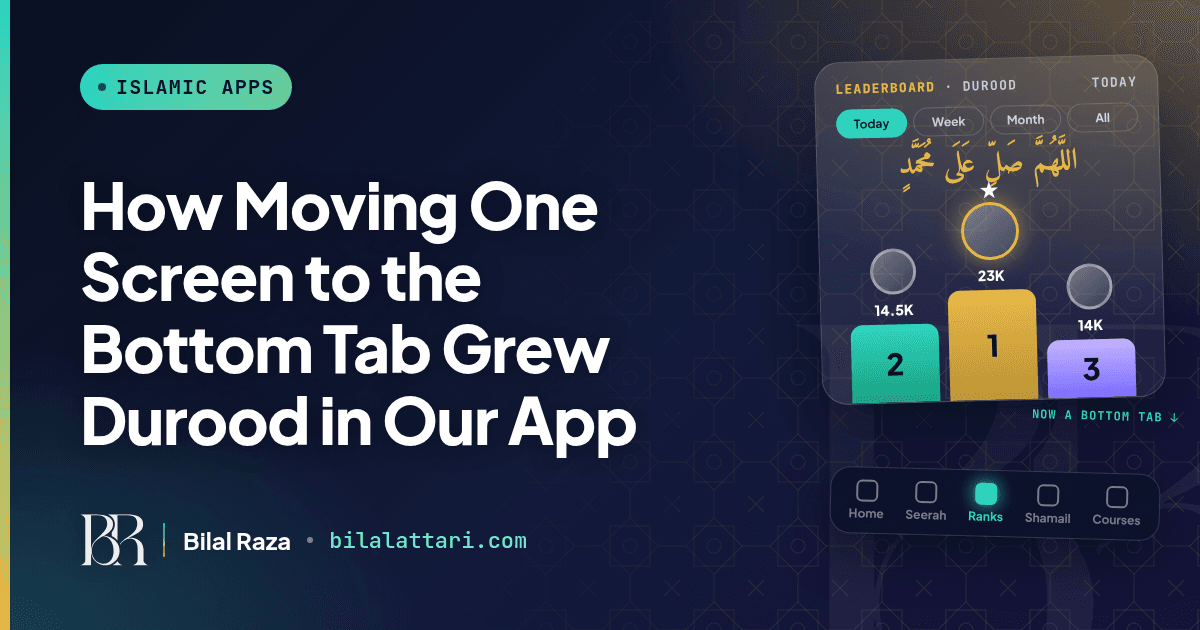
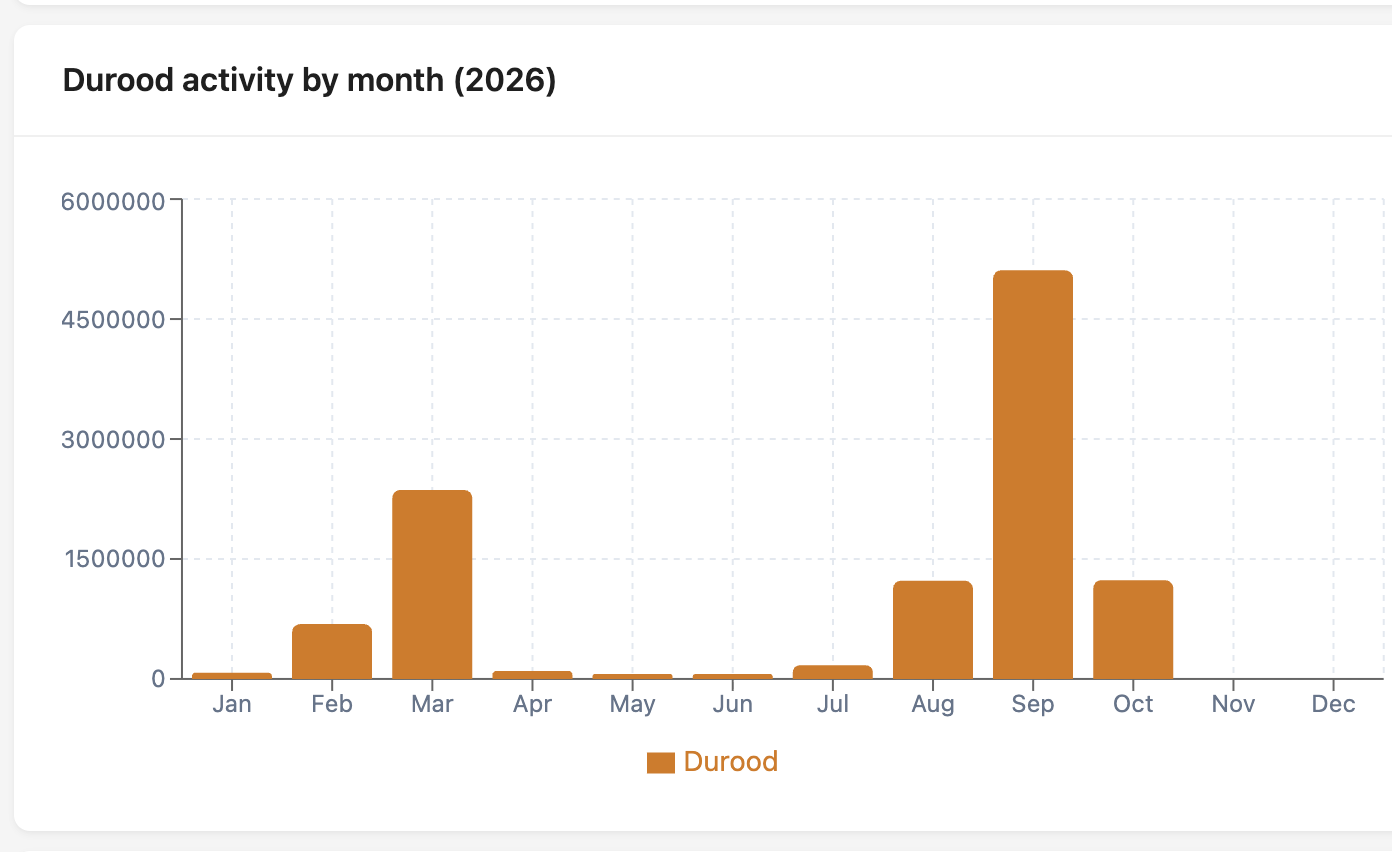
That is what happened with Seerat ki Dunya, our app at Islamic Desk for learning the Seerah, reading Shamail and sending durood upon the Prophet ﷺ. This year I made one navigation change: I moved the leaderboard out of the Profile section and gave it its own tab in the bottom bar. Here is the chart of durood sent in the app, month by month, for 2026 so far.
In this post I will walk you through what the leaderboard is, where it used to live, what I changed, what happened to the numbers, and what I think other app builders can take from it.
What the leaderboard in Seerat ki Dunya is
Inside the app, users can send durood and read Shamail, and every count is recorded. The leaderboard shows those counts so readers can see who has been sending the most durood, for example today or this month. It also shows that they are part of a bigger group of people doing the same thing.
The leaderboard was not new. It had been in the app for a while before this change.
The problem: it was hidden under Profile
Until around August, the leaderboard lived inside the Profile section. If you did not go into your profile, you never saw it. And most people do not open their profile often. They open the app, do what they came for, and leave.
So we had a feature that could motivate people, and almost nobody was looking at it. From January to July the monthly numbers stayed mostly small. March was clearly higher than the months around it, likely a seasonal effect, but I cannot point to one cause for it. Apart from that, April to July each stayed well under 200 thousand durood a month.
What I changed
Around August, I reworked where the leaderboard sits and how it looks. There were four parts to the change.
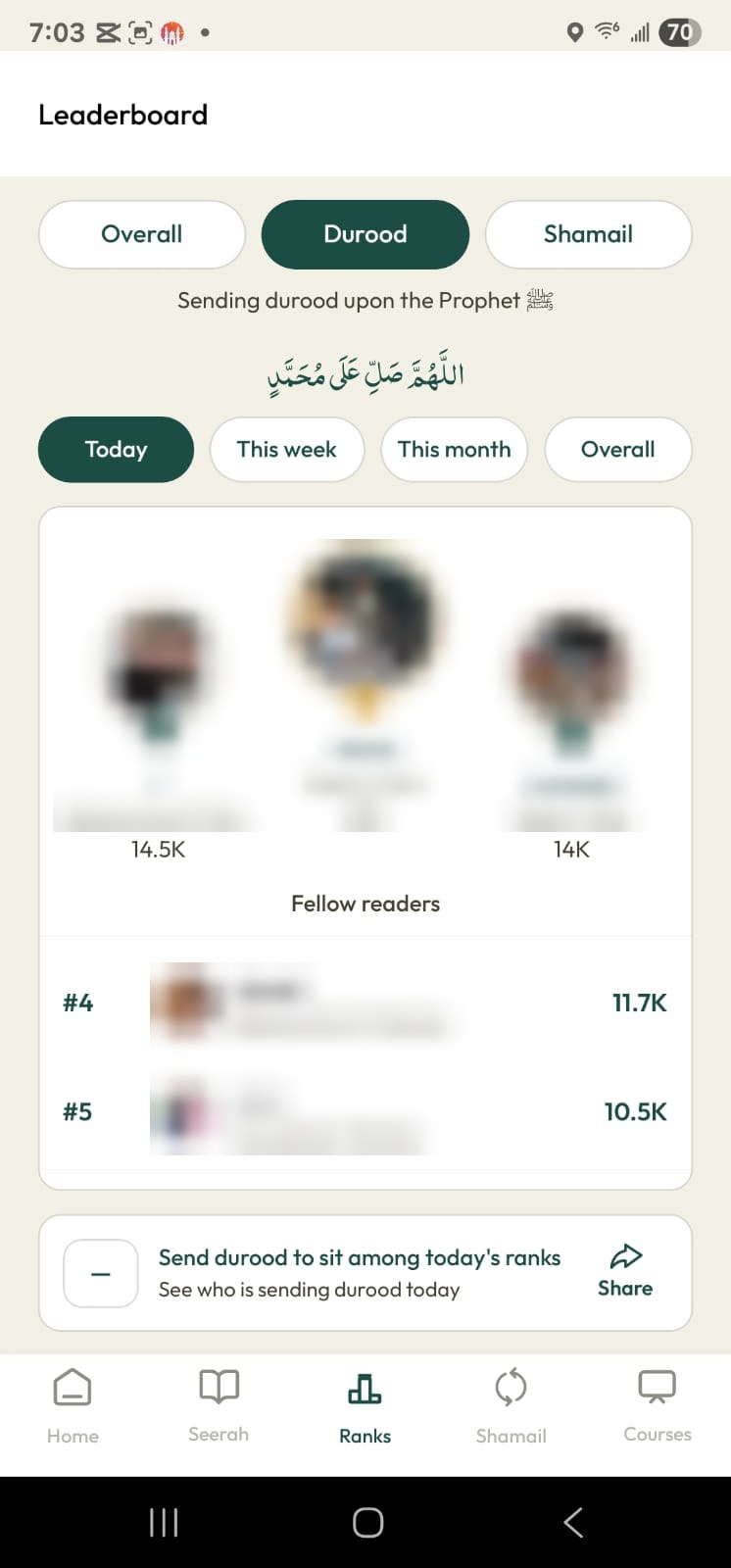
- A Ranks tab in the bottom bar. The bottom navigation now reads Home, Seerah, Ranks, Shamail and Courses. The leaderboard is one tap away from anywhere in the app, at the same level as the main sections.
- Clear filters. At the top you can switch between Today, This week, This month and Overall. "Today" matters most here, because it gives everyone a fresh start every day. You do not need to have been using the app for a year to appear near the top.
- Durood and Shamail split. There are separate tabs for Overall, Durood and Shamail, so each kind of activity has its own ranking instead of being mixed into one number.
- A top three podium and a call to action. The top three readers are shown on a small podium, followed by the rest of the list. At the bottom there is a prompt, "Send durood to sit among today's ranks", with a Share button so people can invite others.
None of these parts is complicated on its own. Together they made the leaderboard something people actually see every day.
A closer look: when people send durood
Tapping on any reader in the list opens a small detail sheet. It shows their rank, how much durood they sent today, and a "When they sent durood" chart that breaks the day down by hour.
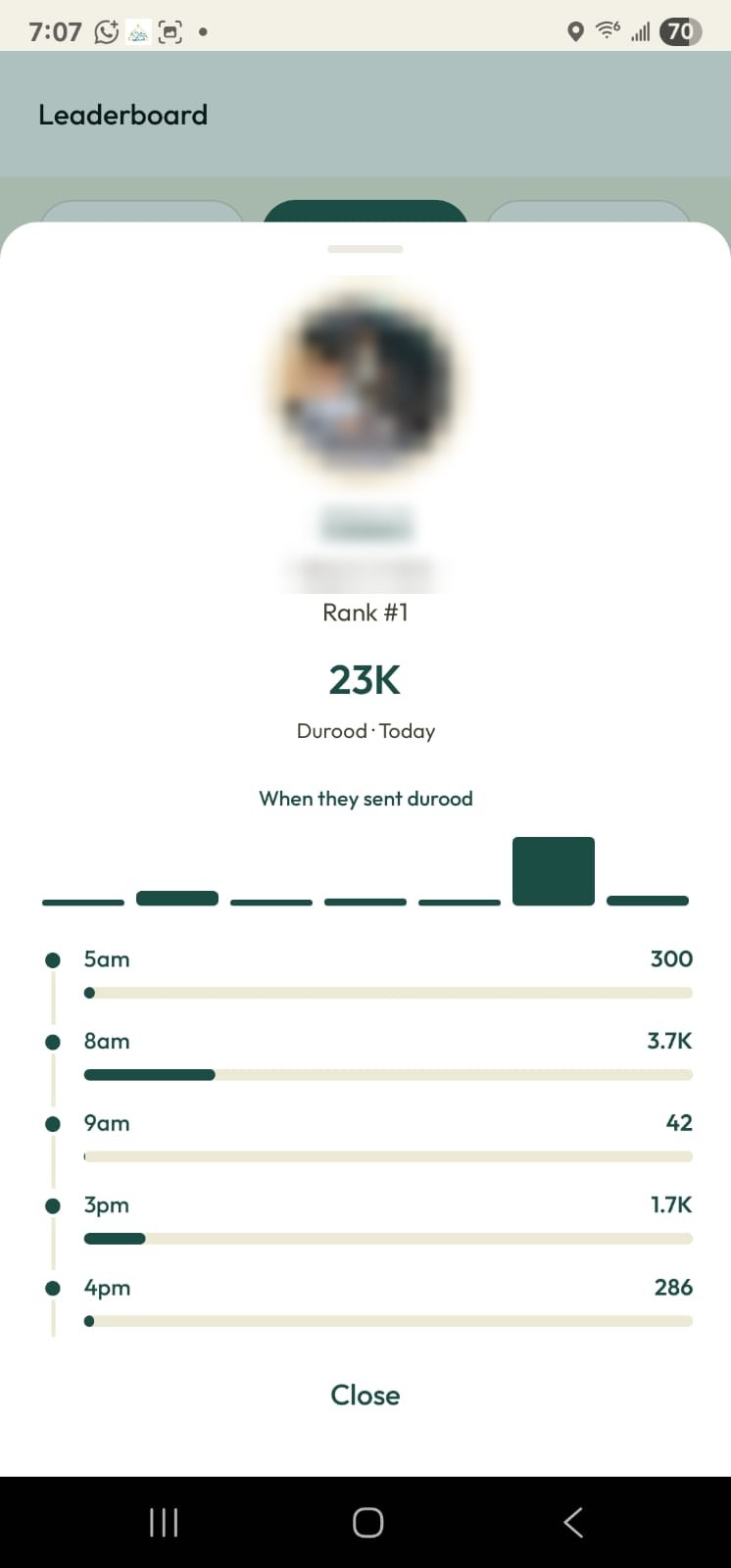
In this example, the reader at rank #1 had sent about 23 thousand durood that day. The timeline shows around 300 at 5 am, about 3.7 thousand at 8 am, 42 at 9 am, about 1.7 thousand at 3 pm and 286 at 4 pm.
I like this screen because it turns a big number into something human. You see that it is not one huge burst. It is someone coming back again and again through the day, after Fajr, in the morning, in the afternoon. That is often more motivating than the total. It quietly says: you can do this too, a little at a time.
The result
Look at the chart again. After the change, the numbers moved quickly:
| Month (2026) | Durood sent (approx.) | Where the leaderboard was |
|---|---|---|
| July | About 150 thousand | Hidden under Profile |
| August | About 1.2 million | Moved to the Ranks tab in the bottom bar |
| September | About 5 million, the highest month of the year so far | Ranks tab |
| October (first six days) | About 1.2 million | Ranks tab |
These figures are approximate, read from our activity chart. I am not going to claim the leaderboard is the only reason, because apps never work that cleanly. But the timing is hard to ignore. The same app, the same content and the same features were there before. What changed is that the leaderboard moved from a hidden corner to the bottom bar, and the curve went up right after.
A note on intention
I want to be careful here. Durood is an act of worship and love for the Prophet ﷺ. It is not a game, and the leaderboard is not meant to make people compete for show.
The aim is simple: to encourage more durood. Seeing that thousands of other people are sending durood today is a gentle push. It reminds you to join in. Whatever the rank, the reward is with Allah, and the intention stays between each person and Him. When we design features like this, we try to keep that in mind and keep the tone soft and encouraging, never boastful.
Lessons for app builders
1. Discoverability is part of the feature
A feature that users cannot find does not really exist for them. Before you build something new, look at what you already have. There may be a good feature hidden two or three taps deep that only needs to be moved.
2. Navigation placement sends a message
Your bottom tab bar tells users what matters in your app. Putting Ranks next to Home, Seerah, Shamail and Courses told our users that the community and their daily durood are central, not a side setting.
3. Use gentle social motivation
Seeing others do something good makes people want to join in. A "Today" filter, a small podium and a friendly prompt can do a lot. You do not need points, badges and streaks everywhere. Keep it simple and respectful, especially in a religious app.
4. Make it easy to act right away
The leaderboard does not just show numbers. It ends with "Send durood to sit among today's ranks" and a Share button. Every screen that motivates should also give people a clear next step.
5. Measure before and after
We could only see this because we tracked durood counts by month. Even a simple monthly chart is enough to tell whether a change helped. Without it, this would just be a feeling.
Wrapping up
We did not add a big new feature to Seerat ki Dunya. We took a leaderboard that was hidden under Profile, gave it its own tab, added clear filters, a durood and shamail split, a share prompt and a simple detail view, and the durood numbers rose sharply in the months after.
If you are building an Islamic app, or any app where you want people to come back and do something good every day, start by checking where your best features live. If you want to talk about app growth, navigation or Islamic app ideas, feel free to reach out to me. I am always happy to share what has worked for us at Islamic Desk.
You can find me at bilalattari.com, email me at attari1235@gmail.com, or message me on LinkedIn.